 RentWeave
Event rental software
Run your entire event rental business from one place
Rental is a loop, not a sale. Stock leaves, an event happens, stock comes back in a different condition, and it has to be ready before the next booking wants it. RentWeave is built around that loop rather than bolted onto a product catalogue.
From $29 a month · 14 days free · No card needed
How it works
What it does, in the order you meet it.
Bookings that actually hold stock
A booking is a claim on a count of units across a date range - 300 chairs from the 12th to the 15th - not a line on a calendar. The moment it exists, those units stop being available to anyone else, and the next person to check a date sees the reduced number rather than the optimistic one.
Turnaround built into availability
Every item carries the prep and cleaning days it needs between one event and the next. Availability subtracts them, so a linen returning on Sunday is not offered for Monday just because the booking technically ended.
Returns that change the record
Checking stock back in is the only moment the truth about your inventory changes, so it is a first-class workflow. Units move between serviceable, damaged, maintenance and missing, and each move writes an adjustment row in the same transaction - you can always see what changed, when, and who changed it.
Access shaped to the job
Roles are assembled from individual capabilities. Warehouse staff can move units between pools and submit a stock count without ever being able to change what the company owns, and cost prices are visible only to the roles you give that capability to.
Who uses it
Built for the trades that move their own stock.
Party rental companies
Chairs, Tables, Linens
Event decorators
Backdrops, Drapes and swagging, Ceremony arches
Wedding rental companies
Chiavari chairs, Round and trestle tables, Table linens
Tent and marquee rental companies
Frame marquees, Sidewalls and windows, Flooring and matting
Event planners
Furniture, Staging and risers, AV and lighting
From the blog
How the work is done.

Availability & bookings · 9 min read
How to stop double-booking your rental equipment
Double-booking is a record-keeping problem, not a discipline problem. Why availability spreadsheets fail, and four rules that stop stock being promised twice.
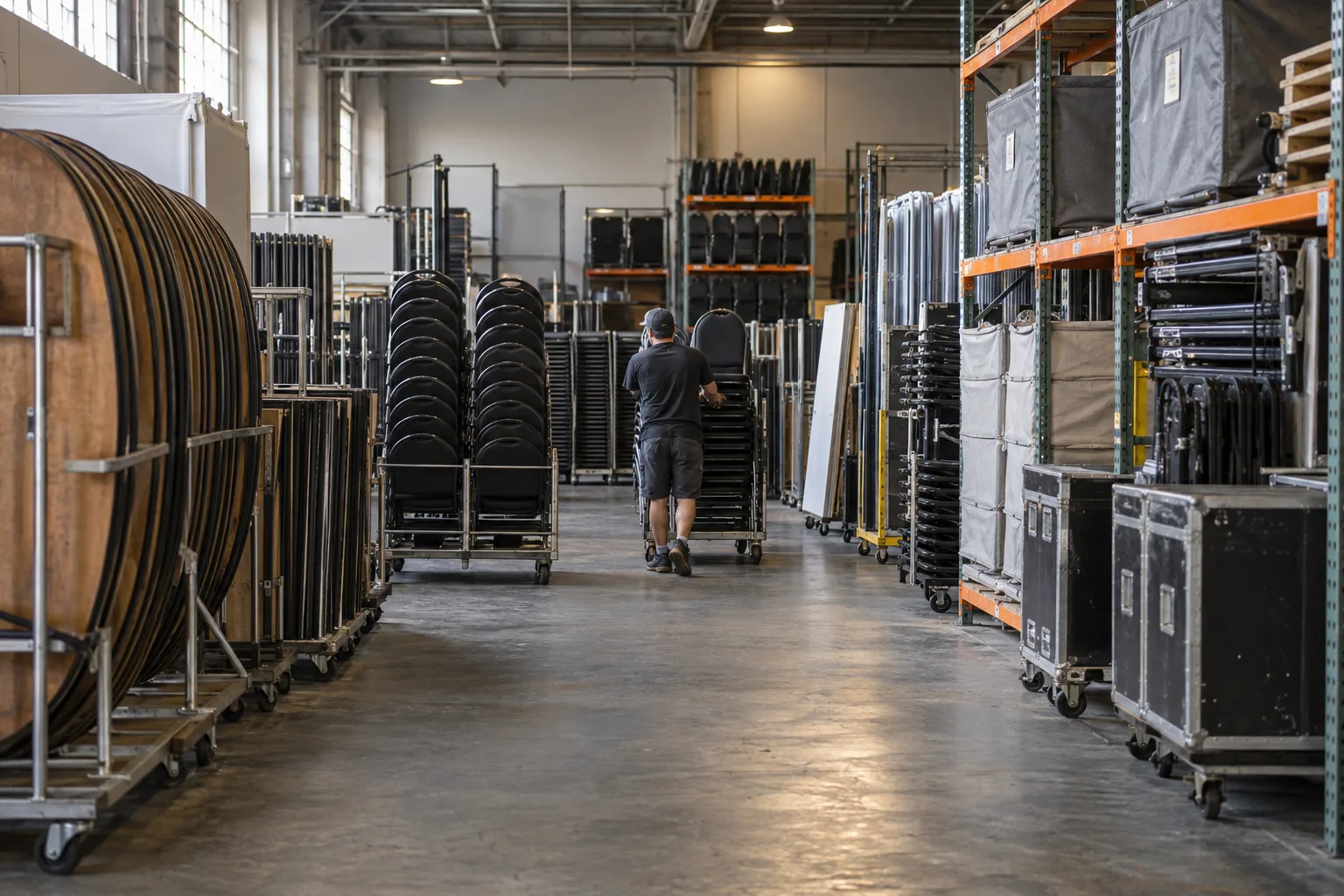
Warehouse operations · 11 min read
How to organise an event rental warehouse
Zones, positions, staging areas and a counting routine that survives a busy weekend. A practical layout guide for event and party rental warehouses.
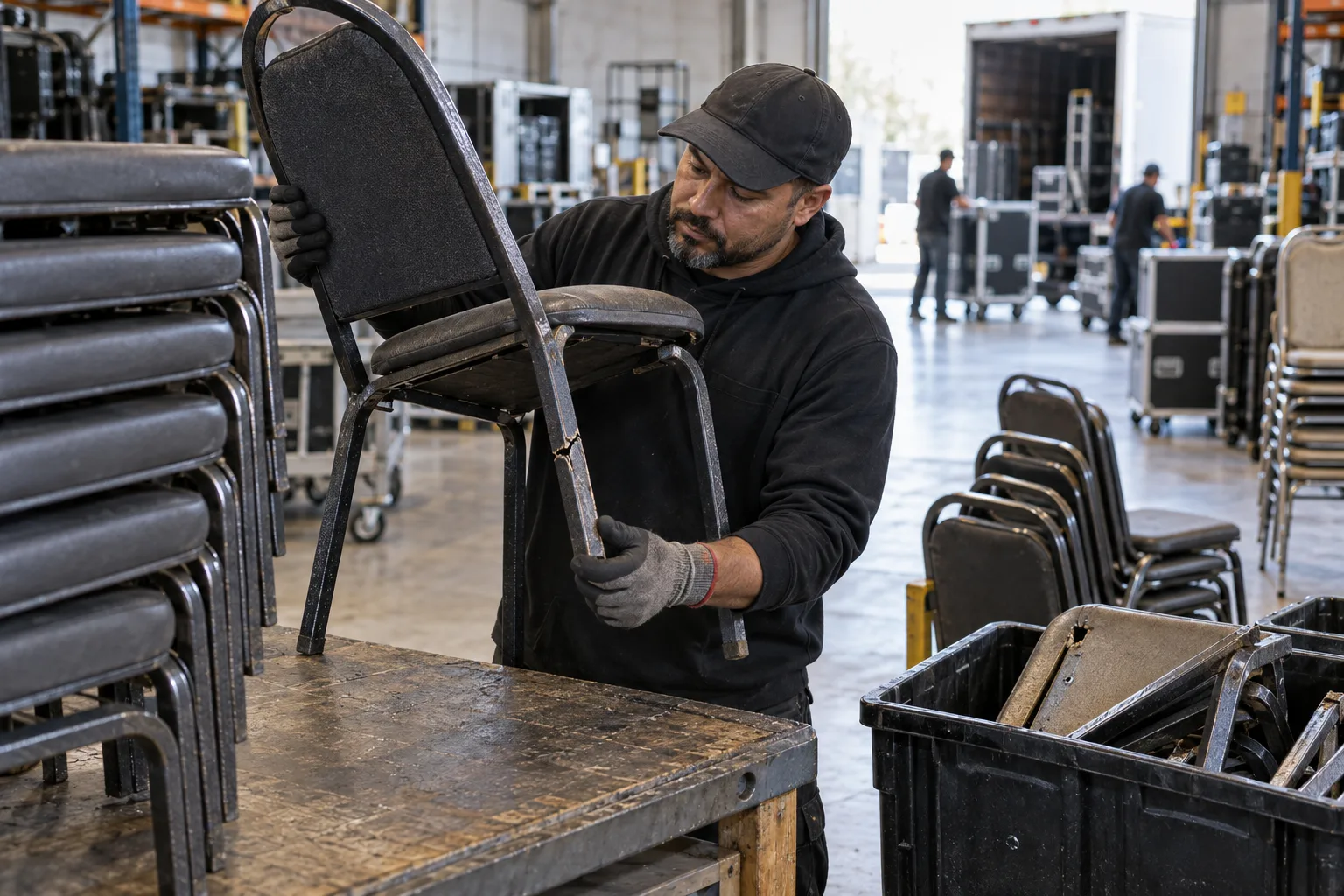
Returns & condition · 10 min read
How to track damaged and missing rental equipment
Damaged, in maintenance, missing and retired are four different things. Keeping them apart is what turns loss from a mystery into a number you can act on.
Related
Inventory management
Inventory that reflects the floor, not the spreadsheet
Warehouse management
The warehouse and the office, looking at one number
Event rental ERP
One system, because the problems are one problem
Before you start
What does event rental software do that general inventory software does not?
Retail inventory assumes stock is sold and gone. Rental stock leaves, comes back in a condition somebody has to record, and needs cleaning or repair before the next booking can have it. The whole model here is a count of interchangeable units moving through that loop, rather than a product that decrements to zero.
Can two bookings claim the same stock?
Not without somebody choosing to. A booking claims a count of units across a date range, and the next person to check those dates sees the reduced figure. Overriding the warning is possible, because a real business sometimes does it on purpose - but it is recorded on the booking, and the conflict shows up on the screen that lists what is contended.
How does it handle the gap between an event finishing and the stock being ready again?
Each item carries its own prep and cleaning days, and availability subtracts them. Linen back on Sunday with two days of turnaround is not offered for Monday, so the number you quote from is the number you can actually load.
What happens when something comes back damaged, or does not come back at all?
Checking stock in is where you say what returned, what returned broken, and what is missing - the three reconcile against what went out, and an over-count is reported rather than quietly corrected. Damaged and missing are real pools, not a note in a comment field, so they come off availability until somebody resolves them.
Does it handle quotes and invoices, or only the stock?
Both. A booking's lines become a draft quote, a quote becomes an invoice, payments record against it, and a receipt is issued automatically for every posted payment including part-payments. Damaged items can be charged at their replacement price on the same document.
See it against your own stock.
Load what you rent, in the quantities you have, and check a date. That is the whole first session, and the trial gives you 14 days.
- No card needed
- Nothing charged when the trial ends
- Read-only, never deleted